
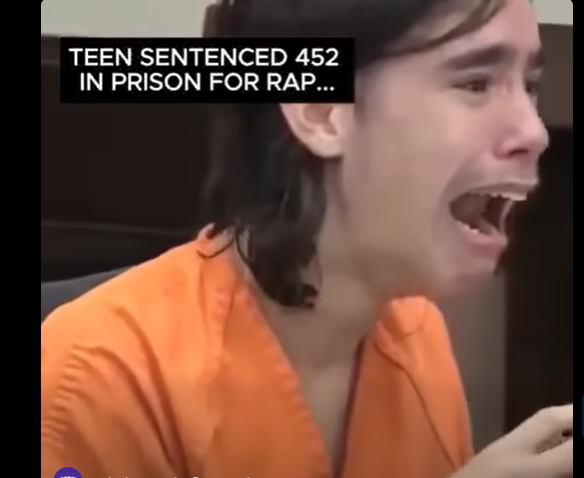
A single number froze the courtroom in silence.
Four hundred and fifty-two years.
A teenager, an ordinary life, and a punishment that stretches beyond imagination. Families broke down. Voices cracked. Some called it justice. Others whispered “cruel.” As arguments raged outside, one question refused to die: how far should the law go when youth collid… Continues…
The teenager who once blended into crowded hallways and weekend plans now exists as a symbol in a national argument he never meant to start. His sentence, built charge upon charge, is less a timeline than a statement: that some acts, no matter the age of the person who commits them, will be answered with the harshest tool the system has. For those who lost, it is the only measure that feels heavy enough to match their grief.
Yet across town, in quieter rooms, others stare at the same number and feel only despair. They see a boy whose worst decisions will never be outlived, whose future has been legally erased. Between these two truths lies a wound in the idea of justice itself: whether punishment should end a life, or leave even the faintest room for it to change.