
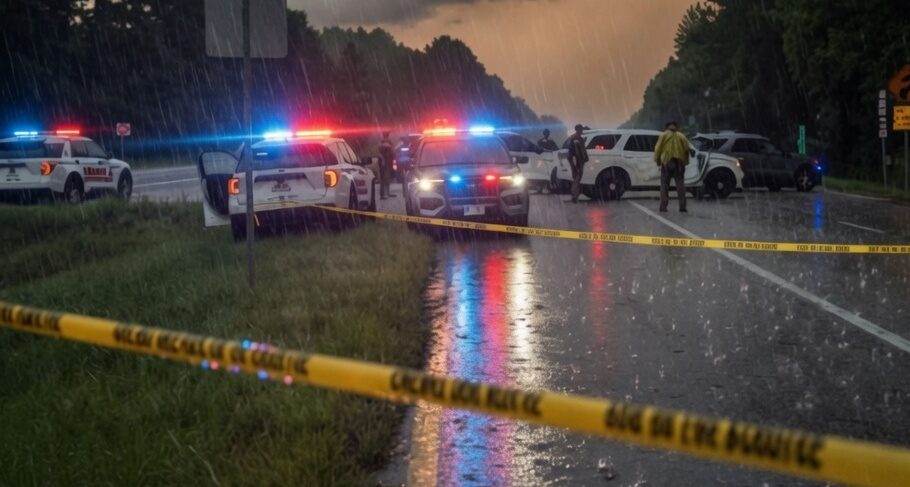
Sirens didn’t just break the silence—they ripped it open. In seconds, a familiar street became a locked-down mystery, swallowed by blue and red light. Parents froze. Children whispered. No one knew what was coming, only that it was close. Police sealed every exit. Buses disappeared. Fear moved in where facts should have been, and the unnam… Continues…
They would talk about that night for years, not because of what was revealed, but because of what never fully was. The barricades eventually came down, the officers withdrew, and the city’s pulse slowly returned. Yet the air felt different, as if something fragile had been permanently disturbed. People walked their streets again, but with new eyes—counting exits, noticing shadows, measuring distances to safety.
In the days that followed, officials offered carefully phrased explanations, enough to reassure but not enough to satisfy. The threat, they said, had been contained. The operation, they insisted, had worked. Still, in living rooms and group chats, the questions lingered. That night became a private turning point for many: a reminder that normalcy is thinner than it looks, and that sometimes the only victory is the quiet relief of waking up to find everyone still there.