
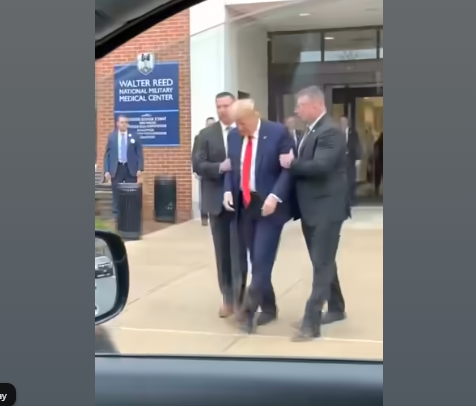
The internet exploded in panic. Within hours, whispers about Donald Trump being secretly rushed to Walter Reed turned into viral “breaking news” across X and Facebook. No proof. No confirmation. Just a sudden change in schedule—and millions ready to believe the worst. As fear surged, speculation hardened into certai… Continues…
A minor adjustment to Donald Trump’s public schedule became the spark for a full-blown online frenzy, as users rushed to fill gaps in information with their own narratives. In the absence of facts, rumor moved faster than reality, and a simple cancellation was recast as evidence of a hidden medical crisis. Posts framed as confident “insider” claims spread widely, blurring the line between concern and manufactured drama.
When official representatives finally stepped in, they cut through the noise: there was no hospitalization, no emergency, no secret trip to Walter Reed. Trump remained at his residence, continuing normal activities. Fact-checkers and established news outlets helped slow the spiral, but the damage revealed something deeper. In a digital world wired for instant reaction, this episode stands as a stark reminder: without patience and verification, anyone’s health, reputation, or truth itself can be rewritten in real time.