
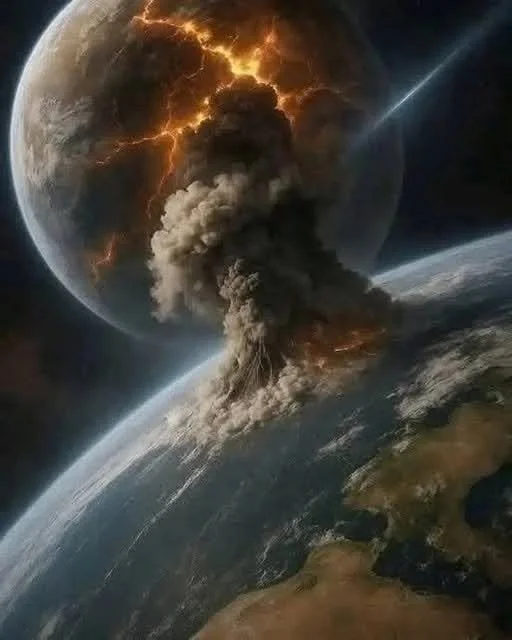
What Will Happen to Earth in 2026?
Every year, people start asking the same question: Is something big going to happen to Earth? With all the rumors online about disasters, asteroids, or even the end of the world, it’s easy to feel a bit uneasy.
But if we step away from the noise and actually look at what scientists are saying, the truth is much calmer—and in some ways, more important.
Not the End… Just Ongoing Change
Nothing sudden or world-ending is expected in 2026. Earth isn’t heading toward a dramatic collapse or some surprise cosmic event. Instead, what’s happening is something slower and more real: the planet is continuing to change, little by little.
The biggest part of that change is climate. Over the years, temperatures have been rising, and that trend isn’t stopping in 2026. Summers in many places are getting hotter, winters less predictable, and weather overall feels more extreme than it used to.
You might not notice it every single day, but over time, it adds up.
Weather Feels Different Now
One thing people around the world are already noticing is how strange the weather can feel. One place might be dealing with floods, while another struggles with drought at the same time.
That pattern is likely to continue in 2026.
Storms may feel stronger. Heatwaves might last longer. Rain could come suddenly and heavily instead of spreading out gently over time. It’s not that every place will experience disaster—but overall, weather is becoming less predictable.
What About Asteroids?
This is one of the most common fears, thanks to movies and social media.
Yes, asteroids will pass near Earth in 2026. But here’s the important part: they do this all the time.
Scientists track these objects very carefully, and none of the known ones pose any danger. Some might pass closer than the Moon, which sounds scary, but in space terms, that’s still a safe distance.
So no, there’s no hidden asteroid heading toward Earth that scientists are keeping secret. If there were a real threat, the global scientific community would be talking about it openly.
A Beautiful Sky Above Us
If anything, 2026 is actually a nice year for skywatching.
There will be meteor showers, eclipses, and moments when planets line up in the sky. These aren’t dangerous—they’re just reminders of how vast and fascinating the universe is.
Sometimes we forget to look up, but years like this give a good reason to.
Even Time Is Slowly Changing
Here’s something surprising: Earth itself is changing in very tiny ways.
Because of melting ice and shifting oceans, the planet’s rotation is slowing down just a little. Days are becoming longer—but only by a fraction of a second.
It’s such a small change that no one would ever feel it. Still, it shows how connected everything is—how even human activity can gently affect something as fundamental as time.
A Smarter, More Aware World
At the same time, humans are getting better at understanding and observing Earth.
Satellites, space missions, and new technology are helping scientists track weather, monitor oceans, and even detect objects in space. In a way, we are more aware of our planet now than ever before.
That doesn’t mean everything is under control—but it does mean we’re not completely in the dark.
There’s no sign of the world ending in 2026. No giant asteroid, no sudden collapse, no hidden disaster waiting around the corner.
But that doesn’t mean everything is perfect either.
The real concern is slower and quieter: how the planet is changing over time, and how humans respond to it.
2026 won’t be the year Earth ends. It will simply be another chapter in a much longer story.
A story where:
- The climate continues to shift
- Weather becomes a bit more unpredictable
- Science keeps discovering new things
- And life goes on, as it always has
In a way, that’s both comforting and challenging. There’s no sudden disaster coming—but there is a responsibility to pay attention to the changes happening around us.
Because the future of Earth isn’t decided by one year.
It’s shaped slowly, by what we do over many years.